How to Show Impact Without Photos of People
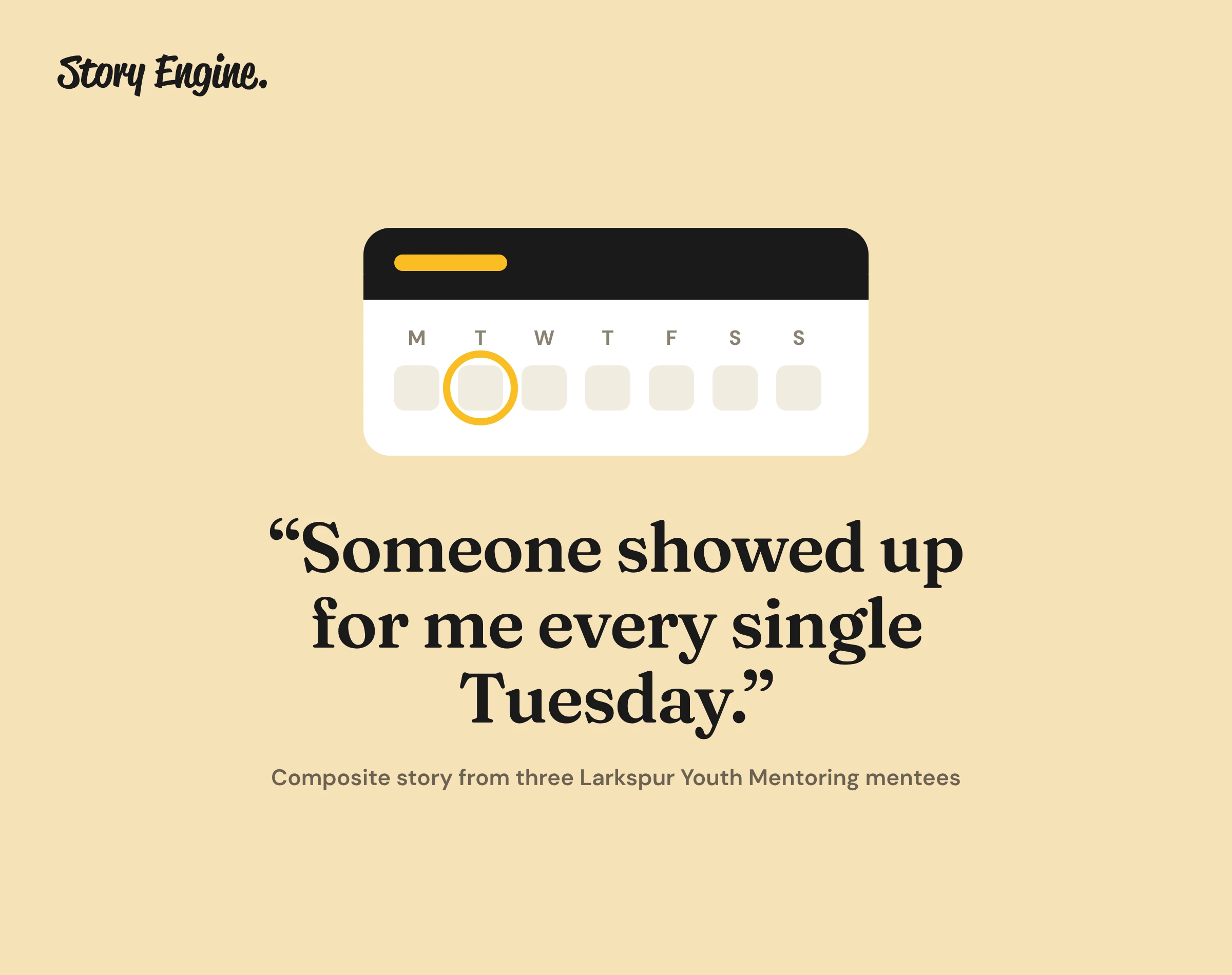
Nonprofits can show impact without identifiable photos by combining anonymized quotes, aggregate data, composite stories, illustrated or stock visuals, audio clips, participant-made art, and third-party validation. Start with a real quote, strip or change identifying details, and pair it with a number that shows scale. For even more range, let staff, volunteers, or board members describe what they've witnessed.
See how Story Engine collects and protects impact stories
This guide will help you tell compelling impact stories when privacy, safety, or consent mean photos of the people you serve are off the table. It covers anonymized quotes, volunteer and staff perspectives, composite stories, data visuals, participant art, illustrated and stock imagery, audio, and third-party validation.
A note before you begin
This guide wasn't written by trauma specialists, lawyers, or safeguarding professionals. It draws on published guidance from organizations with that expertise, which we name throughout and list at the end. It is not a substitute for trained support, your organization's safeguarding policies, or qualified legal advice.
If your organization collects stories about abuse, violence, serious illness, immigration status, or other sensitive issues, we strongly encourage you to consult your own safeguarding lead, legal counsel, or a trauma-informed practitioner before you begin. The same applies to any story involving a child.
Why photos aren't always an option
Some of the people nonprofits serve have very good reasons not to appear in published materials. Survivors of domestic violence, people in immigration proceedings, minors, and anyone receiving mental health or addiction support may face real harm if identified publicly.
Even when safety isn't a concern, a person may simply prefer not to have their face publicly tied to their story.
Consent that isn't freely given isn't real consent. As Bond's ethical guidelines put it, informed consent must be freely given. If a photo creates any risk or discomfort for the storyteller, the ethical path is to find another way to show impact. The sections below give you several.
How to use anonymized quotes
Even when a storyteller is comfortable sharing photos, their words tend to do most of the heavy lifting, and you don't need a photo for a quote to be impactful. When you anonymize quotes, you protect the person while keeping the emotional truth of what they said.
Common ways to anonymize a quote:
- Use a first name only, a pseudonym, or a descriptor like "a mother of two"
- Remove location details that could identify a small community
- Note the change transparently: "Name changed to protect privacy"
What you keep: the person's own words and emotion.
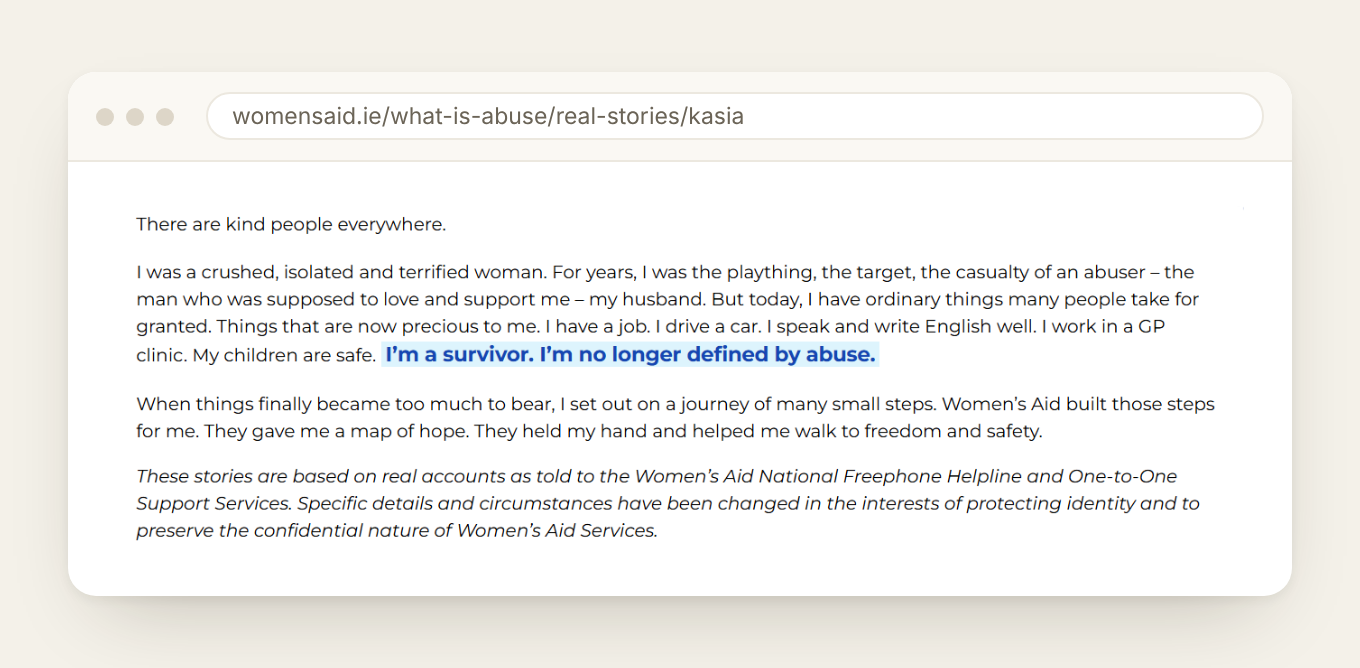
Read the full example: Kasia's story from Women's Aid Ireland.
Even when anonymizing a quote or story, it's important to get the storyteller's consent. Explain what you plan to publish, what details you will alter or remove, and where it will appear. Ask them to approve the final version.
As Caritas Australia's Ethical Storytelling Guidelines note, consent must be freely given, prior, and informed. You are simply a steward of any story shared, not its owner.
For more on how to build a consent process, see our guide to ethical storytelling and what to include in a storyteller consent form.
How to use volunteer, staff, and board stories
Volunteers, staff, and board members can speak honestly about what they've witnessed without revealing identifying details. Because they are speaking about their own experience rather than someone else's, they can be named and photographed with their own consent. This approach keeps the people you serve protected while still communicating your program's impact.
What a volunteer, staff member, or board member can honestly speak to:
- What they observe in the field (what they see, hear, or notice)
- What work they carry out and why that work matters
- What they personally learned or how an experience changed their view
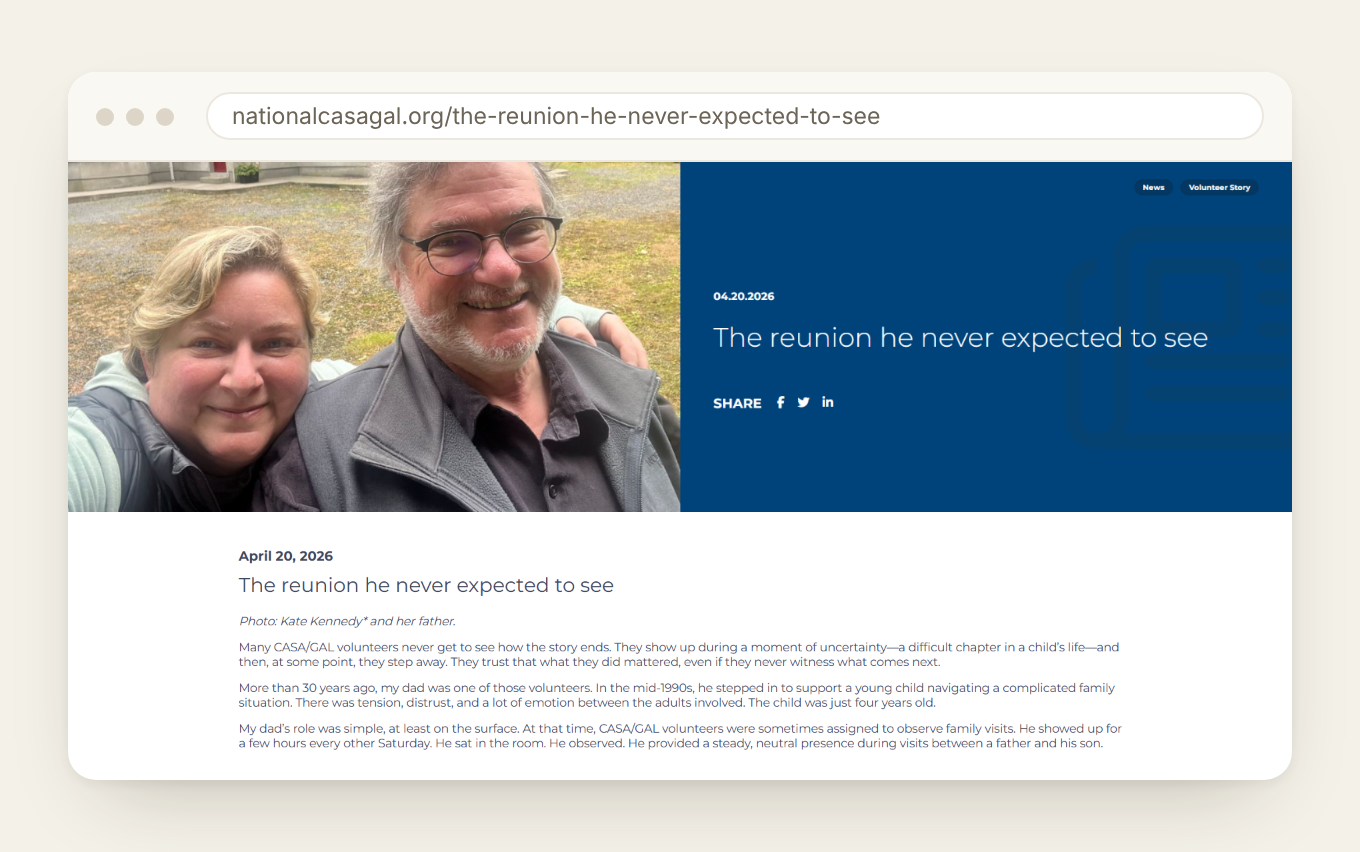
Read the full example: "The reunion he never expected to see" from National CASA/GAL.
You can gather these stories through interviews, written reflections, or short video clips. Because volunteers and staff members are telling their own story, the consent conversation is simpler, though consent is still required. See our guide to what to include in a storyteller consent form for the elements that apply.
Volunteer stories pair well with anonymized client quotes. The volunteer gives the observer's view; the client quote (anonymized) gives the lived experience.
What to avoid: speaking for the people served. A volunteer can say "I watched someone work through a problem they had been stuck on for months" but should not attempt to describe that person's inner feelings, motivations, or outcomes in their voice. This respects the dignity and self-determination of the people your program serves.
How to use composite stories
A composite story is one that blends elements drawn from several real people's experiences into a single narrative, in order to illustrate a pattern that is true across many people but doesn't identify any one of them.
Nonprofits sometimes use composites when the people they serve face genuine safety risks if identified, or when no single story captures the full arc of a program experience.
It is crucial to be open and honest about the fact that you are sharing a composite story. As Mile 91's published analysis of composite case studies notes, failing to do so can undermine the credibility of your storytelling and the trust people have in your work.
If you aren't careful, a composite story can mislead your audience even when every individual element is accurate.
If you decide to use a composite story, follow these practices:
- Label it clearly and prominently: use language like "Composite story" or "Based on the experiences of multiple participants" directly beneath the headline or in an opening note, not buried in a footnote.
- Never invent facts, details, or quotes; every element must be drawn from real, documented experiences.
- Base the composite on common patterns that your program data shows or staff genuinely sees, not on outliers.
- Ask staff who know the program well to review the composite for accuracy and fairness before it is published.
- Do not name or photograph a real individual as the subject of a composite.
Published guidance from SOS Children's Villages recommends ethical review practices including peer review. Apply the same standard here: have someone who works directly with the community read the composite and confirm it reflects reality accurately.
For the broader ethical framework behind these decisions, see our ethical storytelling guide.
How to show scale with aggregate data
One person's story can show what a change feels like. Numbers can show that the change is happening at scale. Used together, they answer the two questions donors and funders most often ask: is your work making a difference, and for how many people?
Aggregate data means numbers drawn from your whole population of people served, rather than from any one individual. When no single person is identifiable, sharing it protects everyone involved.
Useful forms of aggregate data can include:
- General program success rates (for example: "participants in our program are completing job training at twice the rate they did three years ago")
- Before-and-after comparisons (for example: "no one was using the student services desk, but now we record an average of 10 visits every day")
- Trends showing positive shifts over a period of time (for example: "since 2025, our average wait time for a first counseling appointment has dropped from six weeks to nine days")
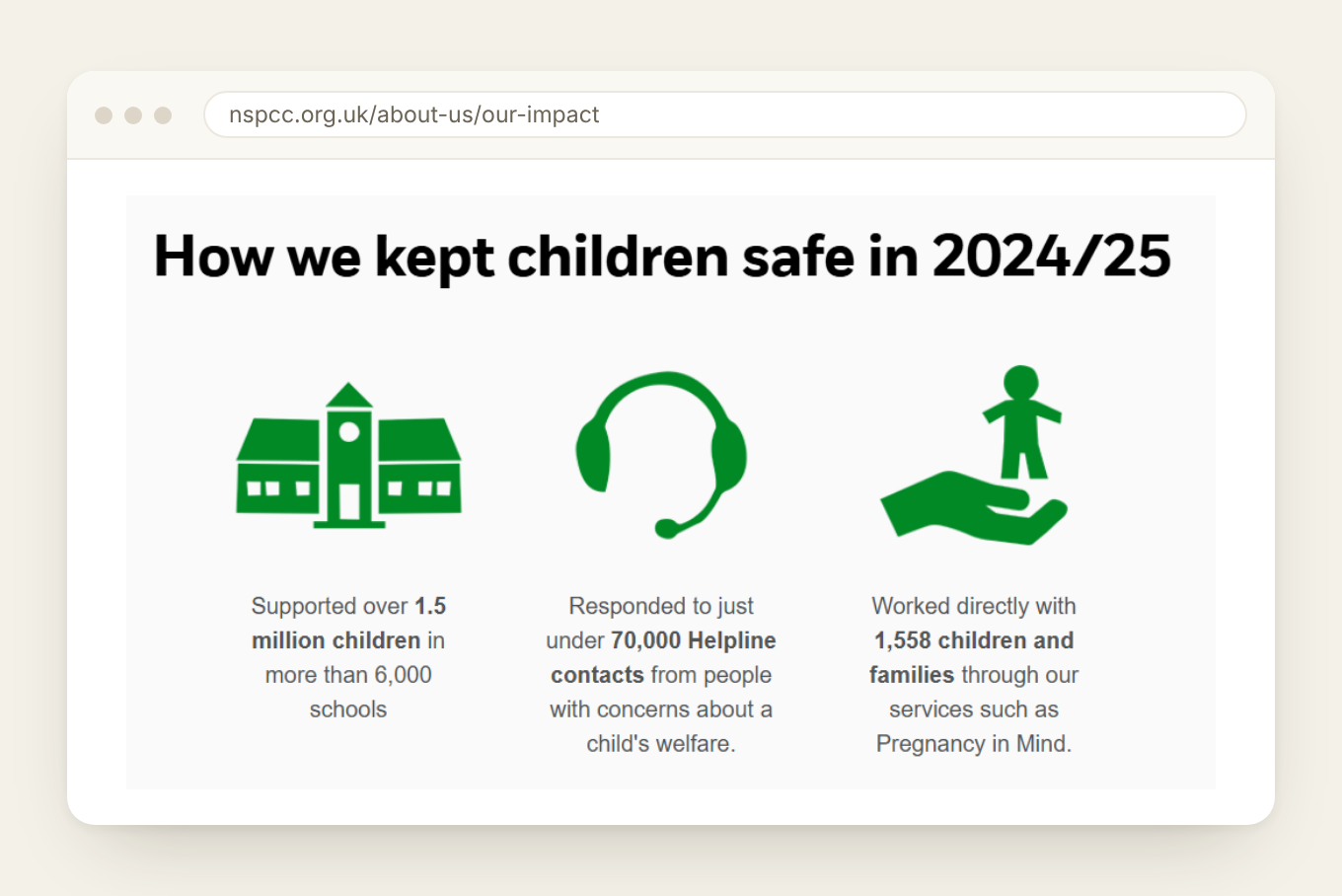
See the full example: NSPCC's impact page.
Other ways to show impact without identifiable photos
There are several other approaches that may be worth pursuing, depending on your program and community.
Participant-made art, handwriting, and objects. Drawings, painted images, written notes, or significant objects created by the people you serve can appear in your content without identifying anyone. The piece itself carries meaning, and you can describe its context without naming its maker. As always: get the creator's consent before publishing their work.
A day-in-the-life of the program told through place and process. Rather than focusing on a person, describe what happens in a session: the room, the materials, the sequence of activities, the sounds. This approach communicates your program's depth and care without centering any individual. It works well as a written narrative or a short video walk-through.
Maps and simple data visuals. A map showing the neighborhoods your program reaches, or a simple chart of outcomes over time, communicates impact visually without depicting anyone specific. Keep data visuals honest: show what your numbers actually support, and don't suggest precision you don't have.
Partner and community voices. A partner organization, a community leader, or a funder who has observed your work can describe what they saw. This is a form of third-party validation (covered in the next section) that adds community credibility without requiring any photo of the people served.
Letting participants choose how they appear. Some people may be comfortable with a silhouette, a close-up of their hands, or a photo of an object that is meaningful to them. Offering a range of options, rather than a binary yes-or-no to a full photo, can open up more stories.
Always let the participant lead that conversation and confirm any choice in writing. The Bond guidelines note that some respondents simply choose not to have their images taken, and that choice deserves full respect.
Stock photography of place, not person. A photo of a neighborhood, a garden, or a workshop table can communicate context without identifying anyone. Choose images that reflect the actual community you work in.
Illustrated or graphic visuals. Simple illustrations, icons, or infographics can represent a population without depicting any individual.
Whatever approach you choose, make sure the visual or format honestly represents the community you serve.
How to use third-party validation
Third-party validation is a quote or finding from someone outside your organization that confirms your work is making a difference. Some examples include:
- A partner organization describing what they observed
- A researcher or evaluator who studied the program
- A funder or government agency that reviewed outcomes
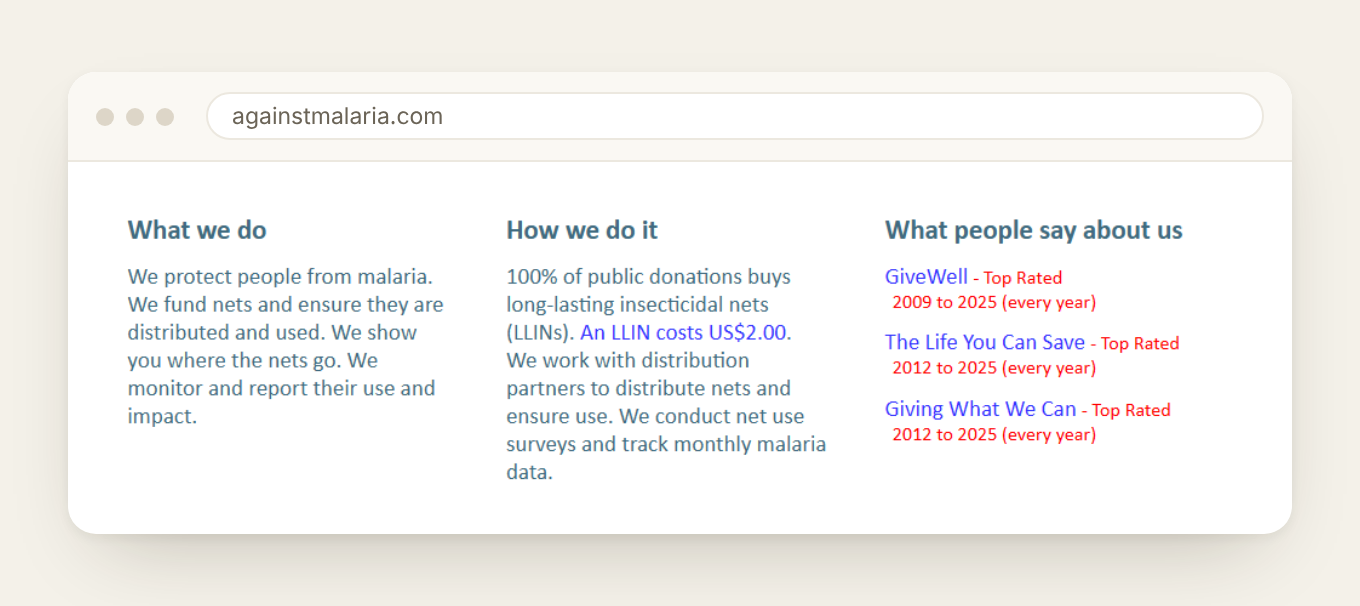
See the full example: the Against Malaria Foundation's homepage.
Third-party quotes work well alongside your anonymized client quotes. The client voice gives the human story; the third-party voice gives external credibility. Neither requires a photo.
How to show impact without photos in Story Engine
Story Engine helps you collect real stories by interview and turn them into content, with consent built into every step. Here is how to use it when photos of the people you serve are off the table.
1. Start a new interview
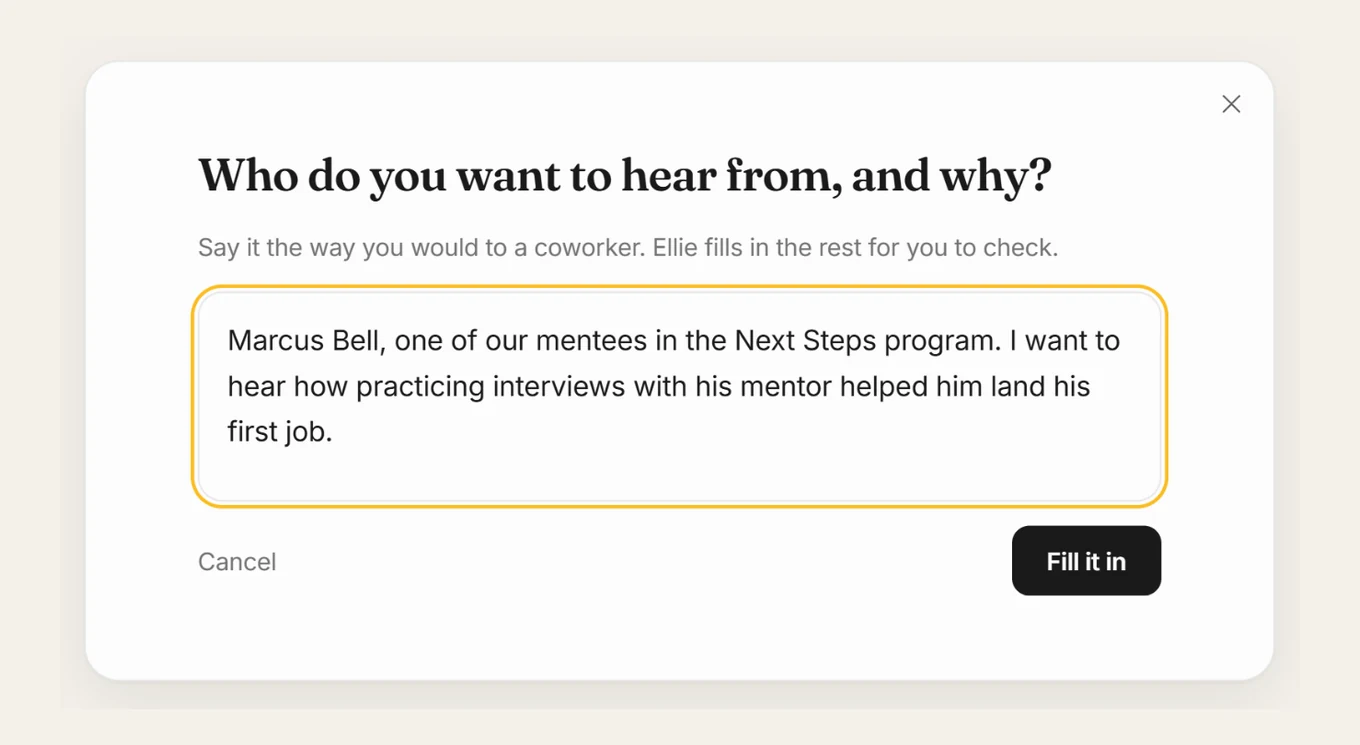
Go to Interviews in the left menu and select New interview, then From one person. Describe who you want to hear from and why, then press Fill it in. This works for clients, volunteers, staff, and board members alike.
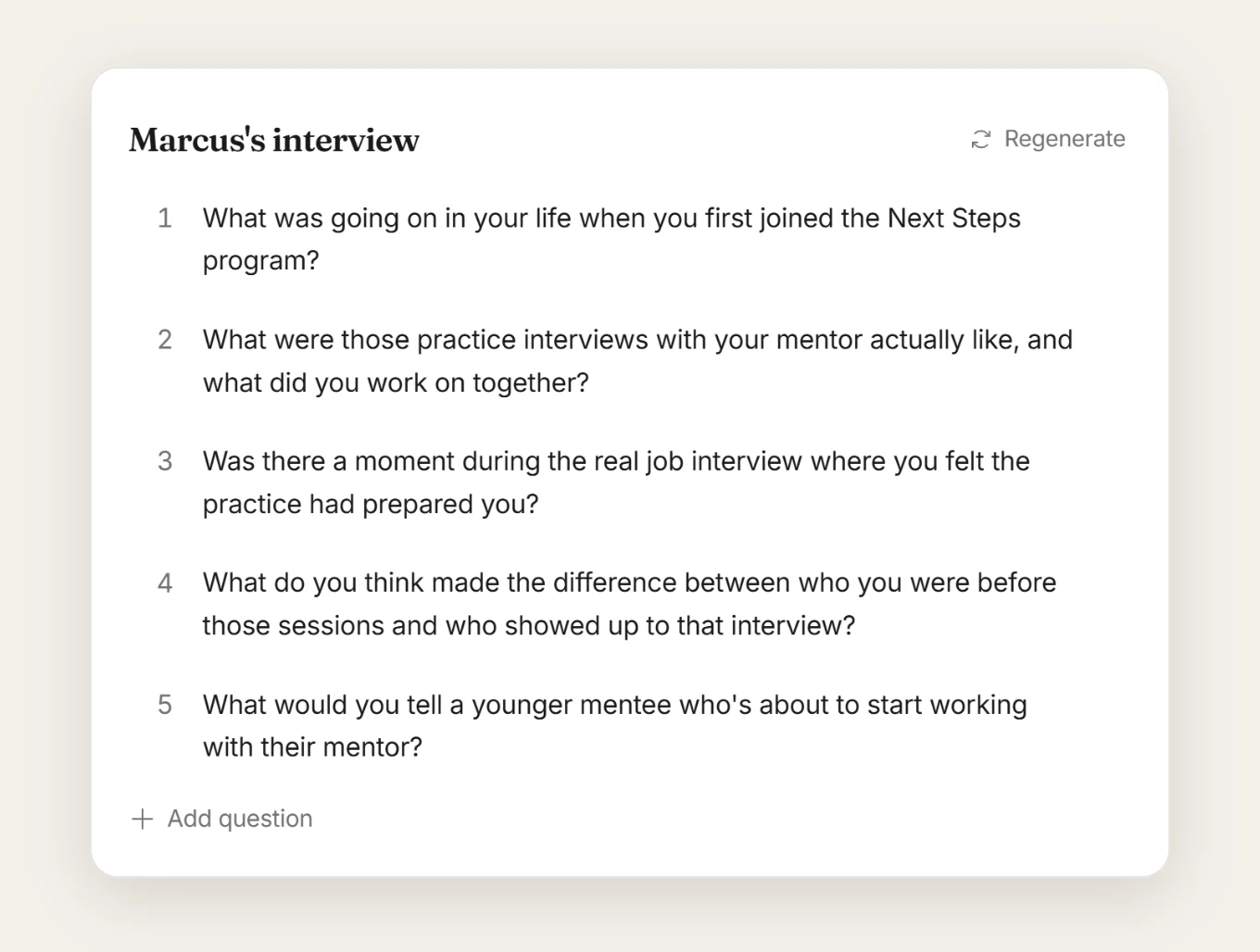
2. Review the questions and check Sensitive topic if needed
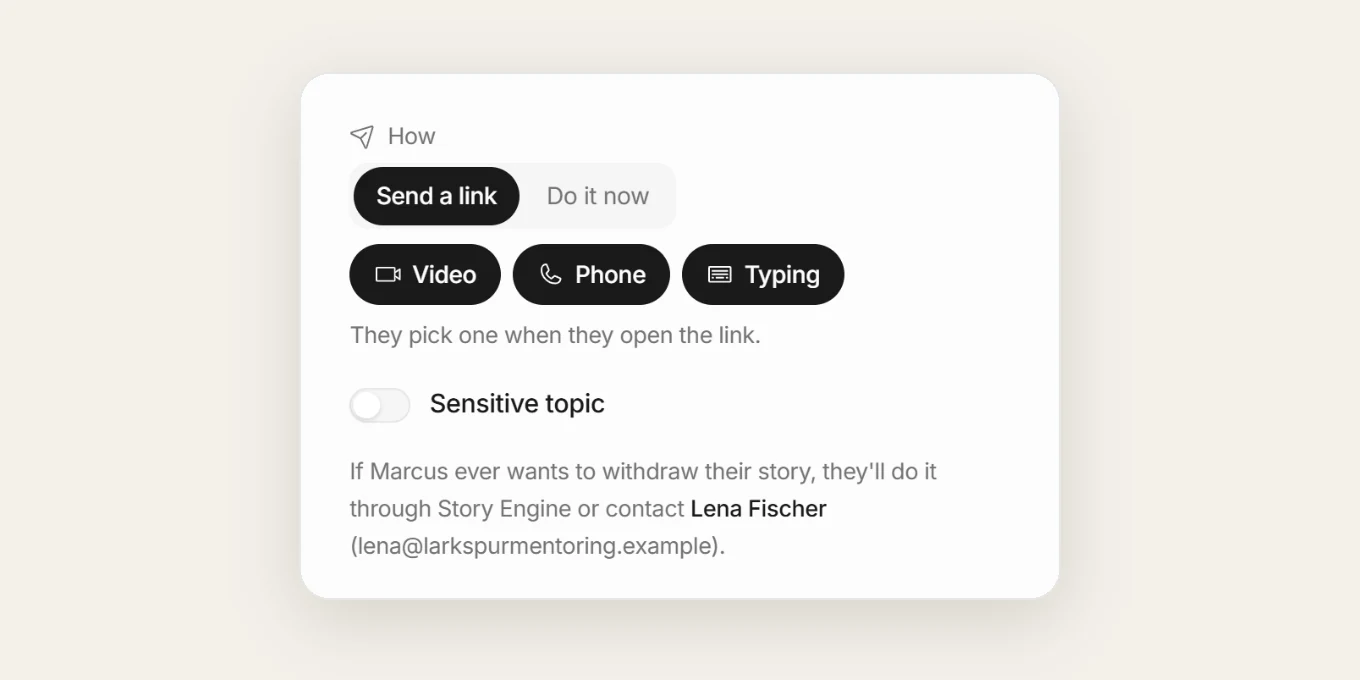
Look over the questions Ellie has suggested. If the topic is sensitive, check that the Sensitive topic switch is on. This switch makes the 988 Lifeline and the Crisis Text Line visible to the storyteller before and during the interview. For the best care, consider having a trained person run the interview instead of the AI interviewer.
3. Choose how they'll answer
Under How, choose Send a link so the person can answer in their own time, or Do it now for a live session. For anonymous stories, you can give storytellers the option to reply by phone or typing (otherwise you might select the video option too).
4. Confirm the consent contact
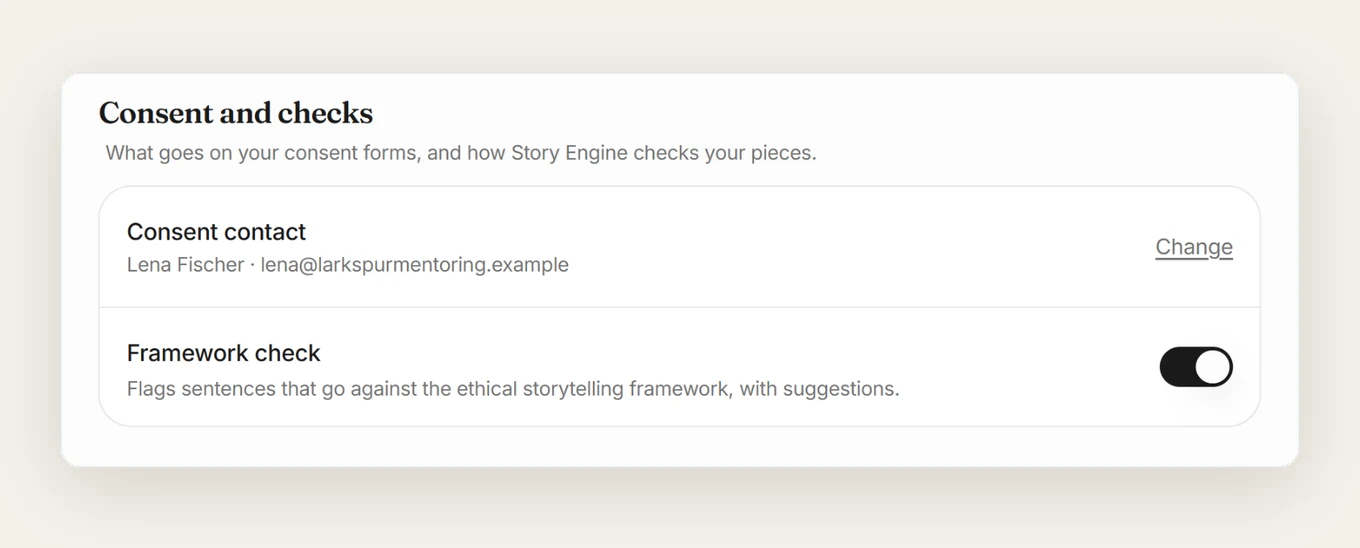
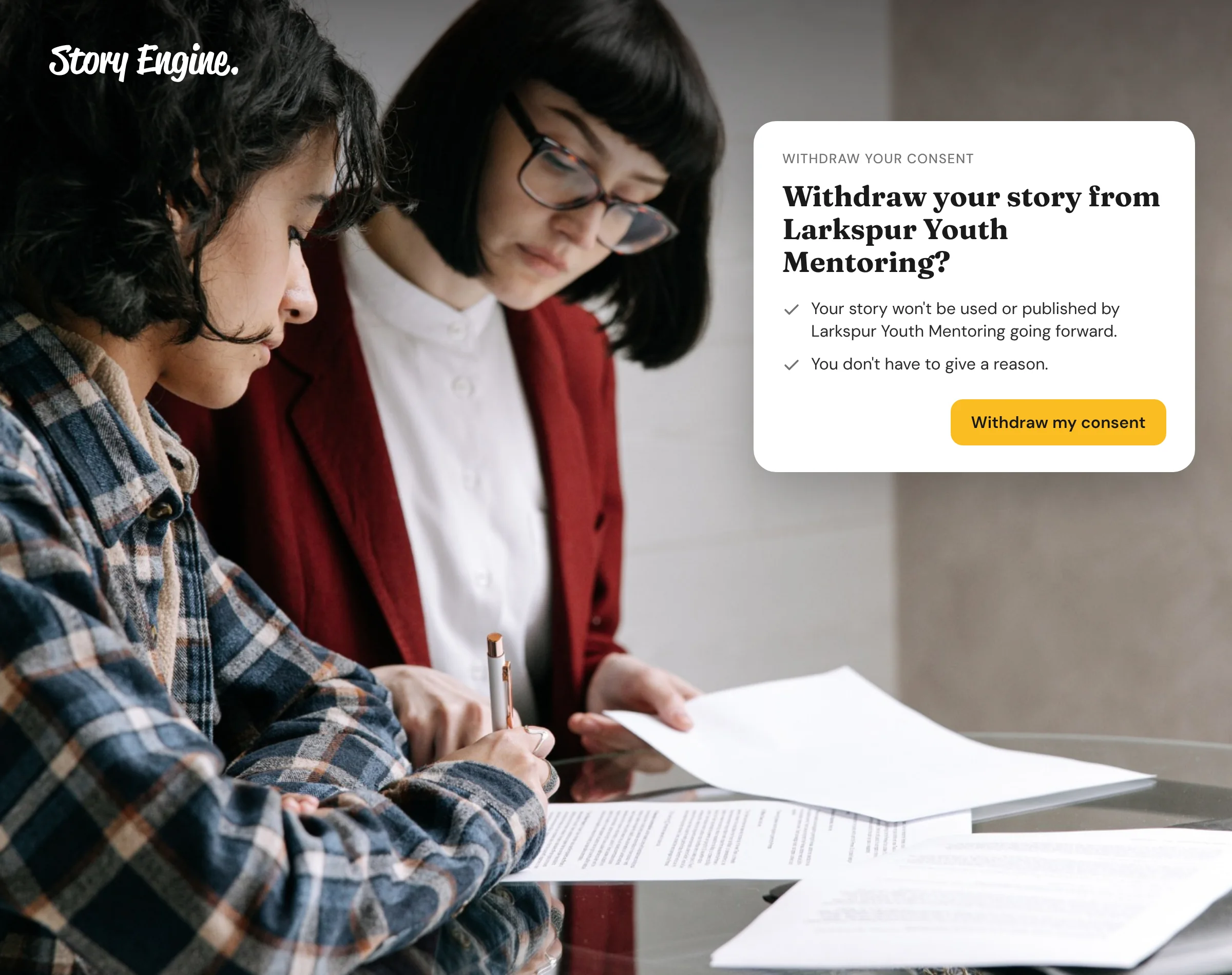
Before sending, make sure the consent contact is correct. Storytellers can always withdraw their consent from inside Story Engine, using the link in their consent email. The contact is only there so that, if your team ever stops using Story Engine, storytellers still know who to reach.
The first time you send an interview, it will ask you to set a consent contact name and email, which then appear on every consent form. You can update this later in Settings › Team under Consent and checks.
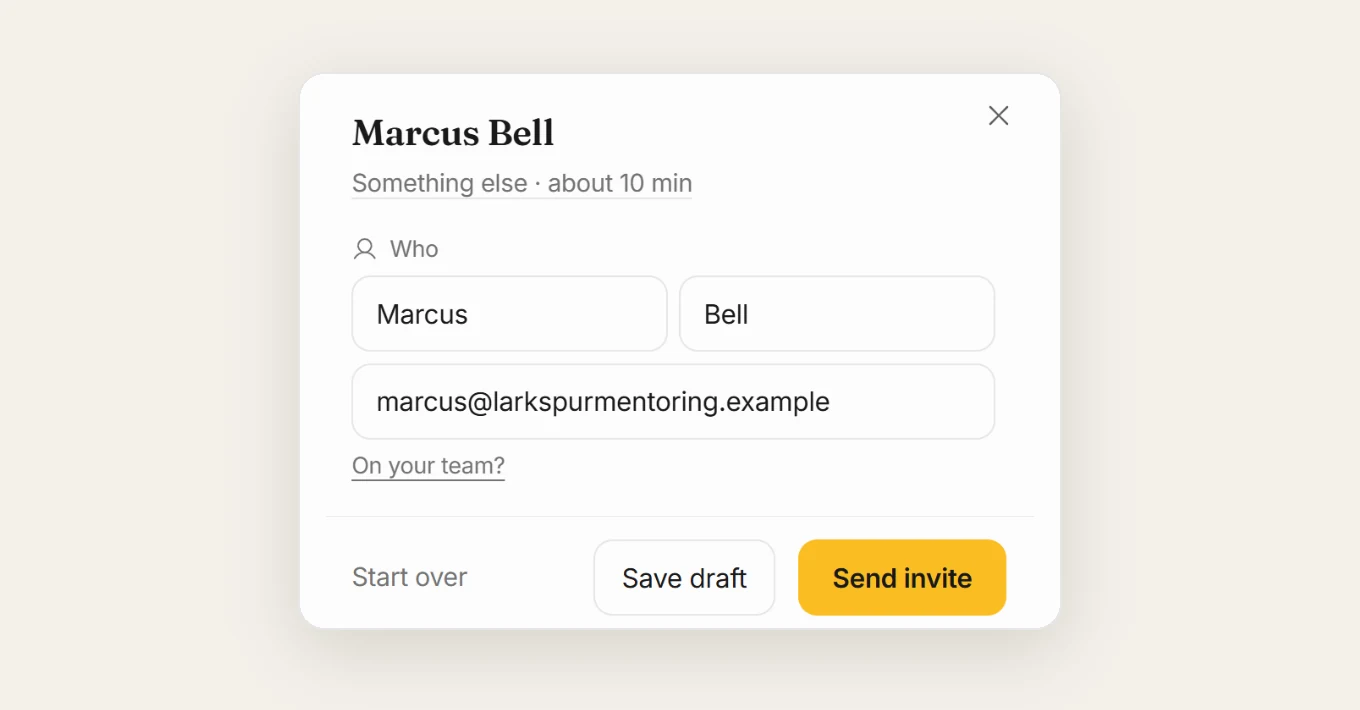
5. Send the invite
Press Send invite. The storyteller signs the consent form and completes the interview at their own pace. They see a summary and their full transcript before approving anything, and can redo any answer or stop entirely. Nothing reaches your team until they approve it.
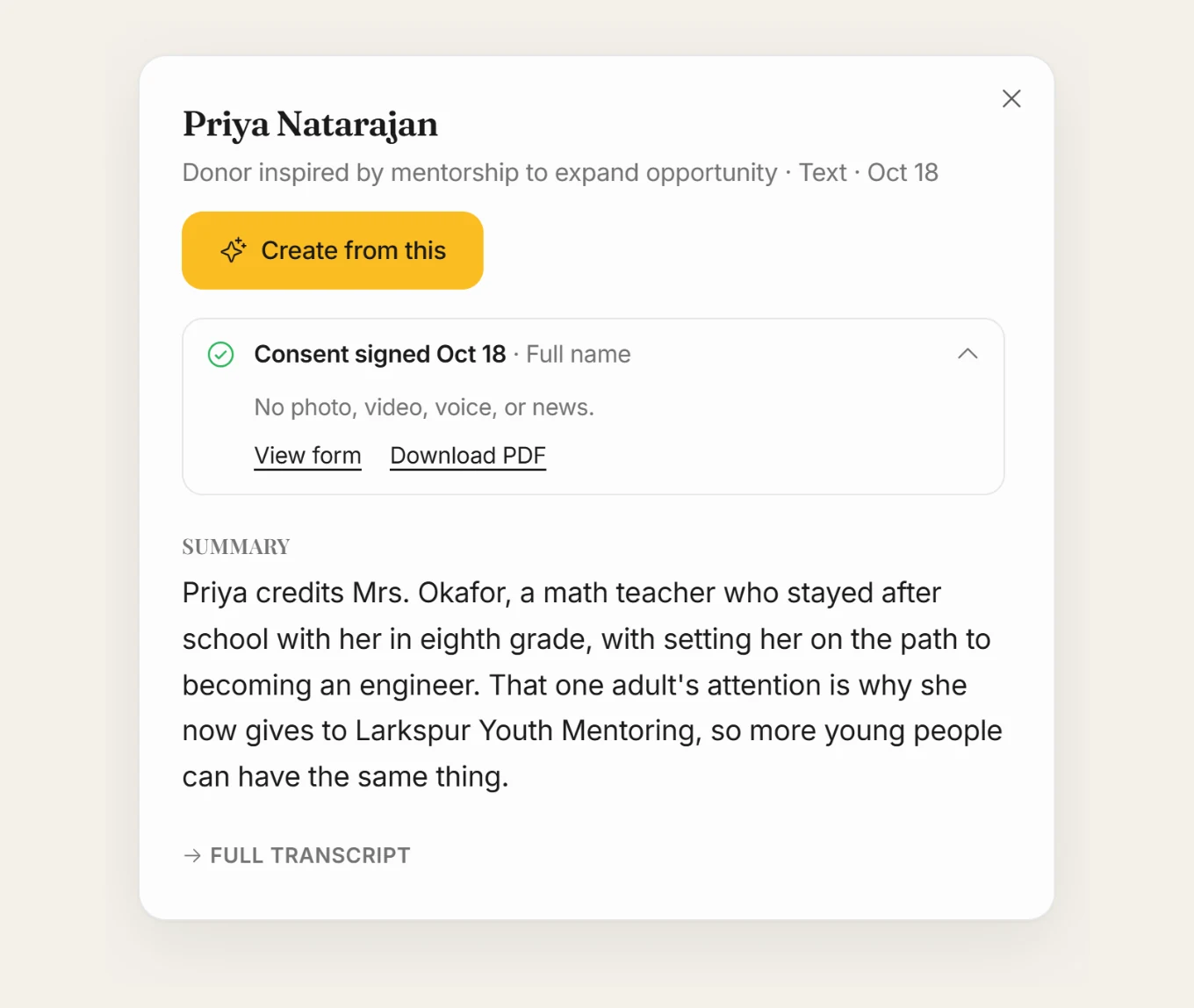
6. Create the piece
Once the interview is approved, open it and select Create from this to draft a quote-led piece in your voice. In the editor, you can edit anything our AI may have missed (AI can make mistakes, so carefully review everything before publishing).
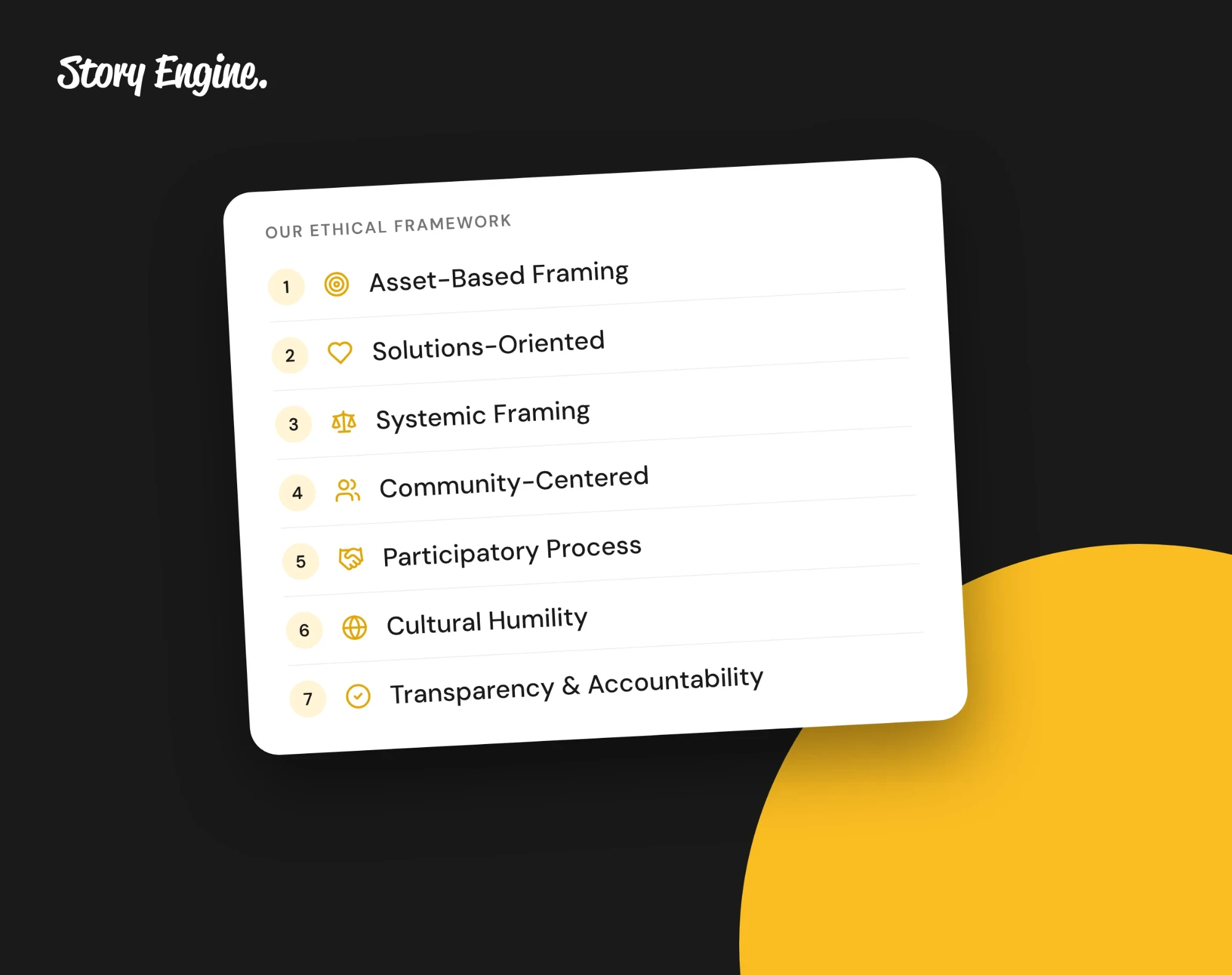
Use the Ethical Framework check in the editor to review the piece against principles like community dignity and asset-based framing.
7. Handle consent changes
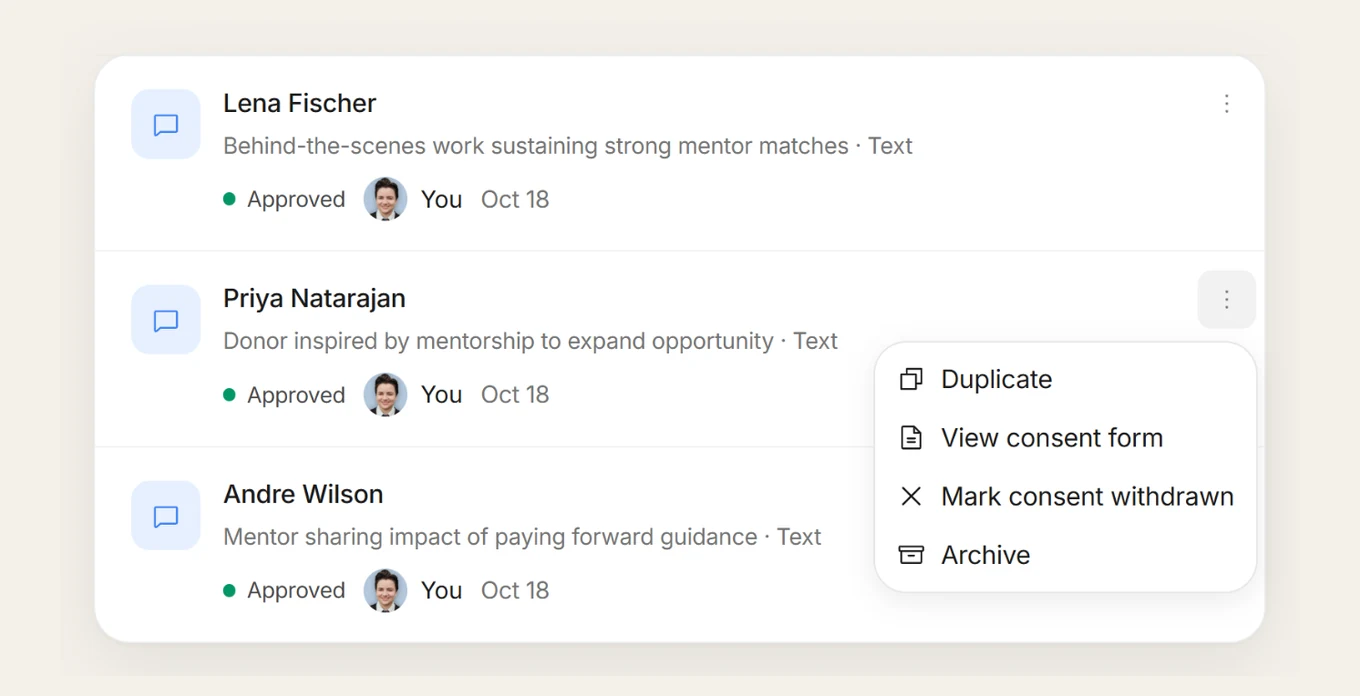
If a storyteller later changes their mind, they can withdraw consent from the link in their consent email, or contact you directly from the information you provide on the form. Your team can also do it from the interview's row menu using Mark consent withdrawn.
Frequently asked questions
Can we publish a quote without any photo at all?
Yes. A quote with no image is a complete piece of content. In Story Engine, you can create a social media post, email, report section, and more directly from an approved interview transcript, with no photo required.
Can volunteers or staff tell impact stories on our behalf?
Yes, with care. Volunteers and staff can speak to what they personally witnessed, did, and learned. They should not speak for the people served or describe someone else's inner experience. In Story Engine, you can run a standard interview with a volunteer or staff member and use their approved transcript to draft content, just as you would with any other storyteller.
Are composite stories acceptable to use?
Yes, when done carefully. Every element must come from real, documented experiences, never invented. The composite must be clearly labeled as such, reviewed by staff who know the program, and never present the composite as a real person. You can collect all the quotes you need through Story Engine and create your composite from there. See our guide to ethical storytelling for the broader principles.
Do we need new consent if we anonymize a story we already collected?
Yes, go back to the storyteller and get their approval for the anonymized version. In Story Engine, the consent form covers how the story will be used, so if the form or the use changes, a new conversation is the right step. If the person has since withdrawn consent, Story Engine's records will show that.
What if a storyteller is happy to be photographed but we still have privacy concerns?
If the person gives freely informed consent and you've thought through any risks, it is typically best to respect their choice (however, as noted at the beginning of this page, we strongly encourage you to consult your own safeguarding lead, legal counsel, or a trauma-informed practitioner). Story Engine keeps signed consent forms, and the person who signed can withdraw their consent themselves from the link in their consent email; a team member can also withdraw it from the interview's row menu.
Start with one story and one honest format
Pick one recent story from someone your program touched, whether that's a participant (with their consent and details changed), a volunteer describing what they saw, or a composite clearly labeled as such. Pair it with one aggregate number from your program data.
That combination is a complete, honest, and privacy-respecting impact piece. Our guides on ethical storytelling and consent forms can help you build the process around it.
Sources
- Putting the people in the pictures first: Guidelines for the ethical use of images and stories (Bond), 2024
- Consent collection for ethical storytelling (Bond), 2025
- Caritas Australia Ethical Storytelling Guidelines
- Should your charity be using composite case studies? - Blog - Mile 91
- Ethical Storytelling Guidelines User guide March 2026 (SOS Children's Villages)
- Stories or Data: Which Makes the Stronger Case? (Goodman Center), 2009
About the authors
A nonprofit copywriter and partner at Good Creatives.

Founded the agency Good Creatives in 2015, recognized by the American Institute of Graphic Arts.