
Interview Questions for Nonprofit Client Stories
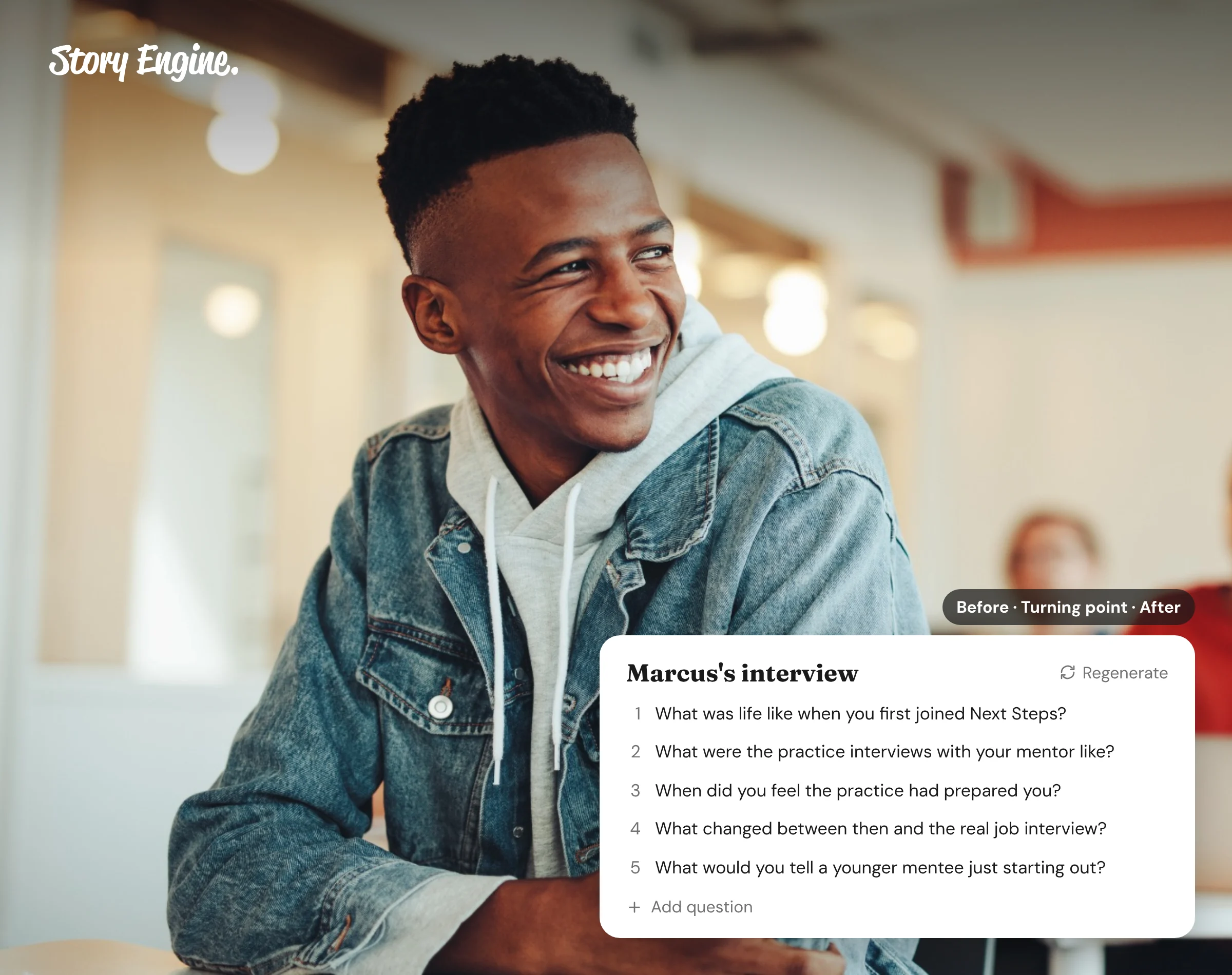
Effective client story interviews follow a three-part arc: what life was like before, the moment something shifted, and what has changed since. That structure gives you material for a complete story rather than a snapshot. Start with open, low-stakes questions, let the person set the pace, and always give them the option to skip anything.
See how Story Engine guides interviews from first question to final story.
This guide covers a core question set organized by arc, trauma-informed interview practices, consent and recording, and how to run the interview inside Story Engine.
A note before you begin
This guide wasn't written by trauma specialists, lawyers, or safeguarding professionals. It draws on published guidance from organizations with that expertise, which we name throughout and list at the end. It is not a substitute for trained support, your organization's safeguarding policies, or qualified legal advice.
If your organization collects stories about abuse, violence, serious illness, immigration status, or other sensitive issues, we strongly encourage you to consult your own safeguarding lead, legal counsel, or a trauma-informed practitioner before you begin. The same applies to any story involving a child.
Why structure questions around a before, turning point, and after arc?
A story without shape is hard to tell and harder to remember. The before-turning point-after arc gives every answer a place to land.
- The before establishes the person's situation and what made it difficult. It builds context without reducing them to their hardest moment.
- The turning point captures when contact with your program began and what changed about their situation.
- The after shows where they are now and what they can do or feel that they couldn't before.
The arc frames people by their strengths and their journey, not by what they lacked.
What questions should you ask?
Below is a core set of questions that work for nearly any interview. You will not always ask every question, and you should reword them to match your program and your relationship with the person.
Before
- Can you tell me a little about what your life looked like before you connected with us?
- What was the main challenge you were facing at that time?
Turning point
- How did you first hear about the program, and what made you decide to reach out?
- Was there a specific moment when something clicked or shifted for you?
After
- How would you describe where things stand for you now?
- What can you do today that you couldn't do before?
- Is there anything you would want someone in a similar situation to know?
Keep questions open-ended. Questions that begin with "why" can feel like a challenge; "what" and "how" questions invite description instead.
For example: rather than "Why did you wait so long to ask for help?", try "What was going through your mind when you decided to reach out?"
How to handle sensitive topics and trauma-informed practice
Not every client story involves trauma, but many do. These simple practices can do a lot to help storytellers feel safe and comfortable:
Remind them they can skip anything. Say this out loud before you begin, not just in a consent form. Something like: "You are welcome to skip any question, and you can stop at any point. You are in control of this conversation."
Start somewhere comfortable. Open with something low-stakes: their name, how long they have been involved with the program, or where they are joining from.
Don't push for the hardest details. Questions about what a person did to survive or move forward tend to be more useful, and less harmful, than questions that dwell on the worst of what happened.
Look after yourself too. Hearing about someone's hardest moments can affect you. Take breaks, and talk to a colleague afterward.
AI interviewers can't read distress or respond to it like a human can. If a client's story involves trauma, abuse or grief, a trained person is the safer choice for the interview itself.
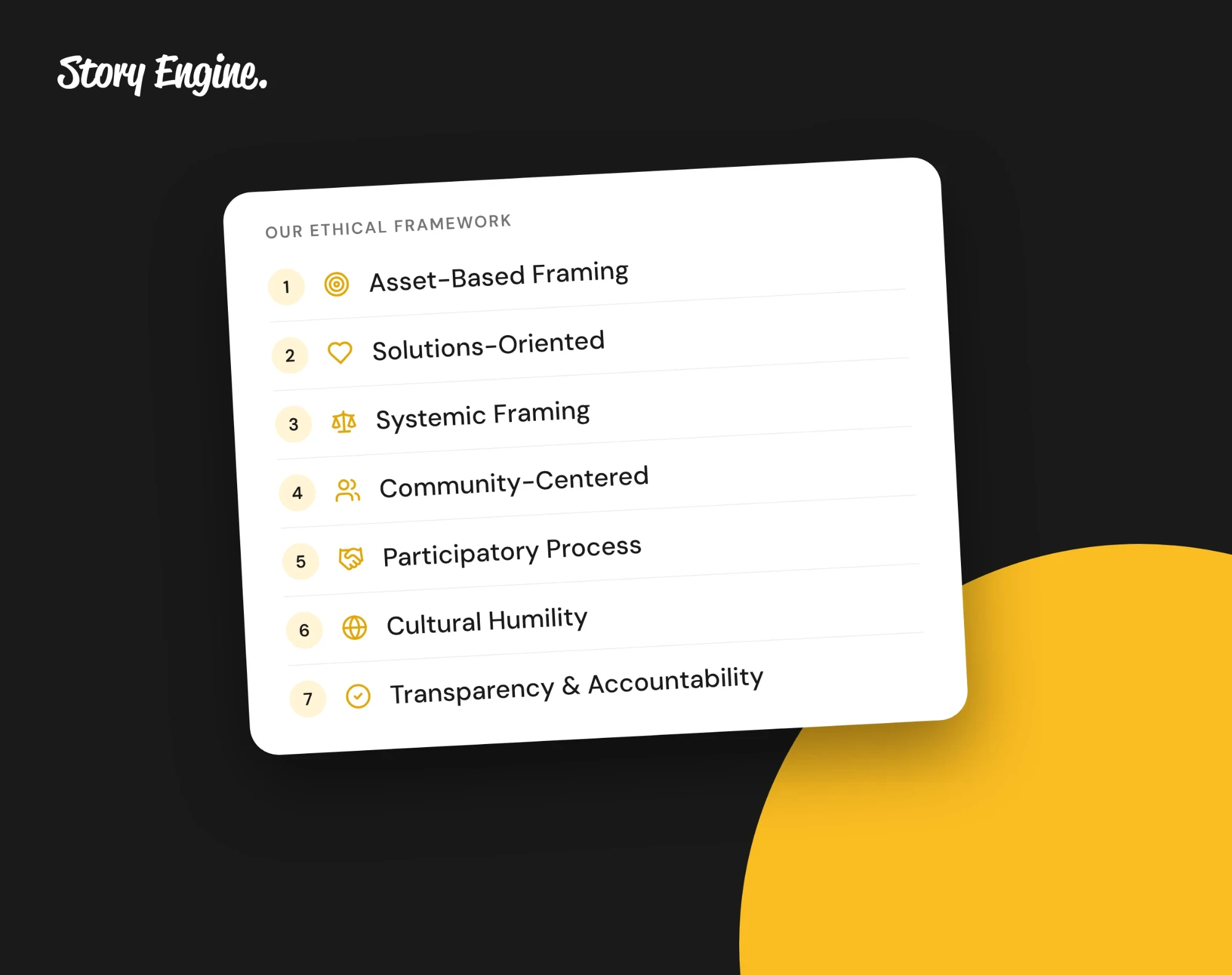
If your program works with people who have experienced violence, housing instability, health crises, or other serious adversity, treat the sensitive topic setting as a default for those interviews, not an exception. Learn more about how to collect and tell ethical stories.
What do you need to cover for consent and recording?
Consent is not a box to check before the real work starts. It is part of how you treat the person telling the story.
Before the interview:
- Explain how the story will be used, what formats it may appear in, and who will see it.
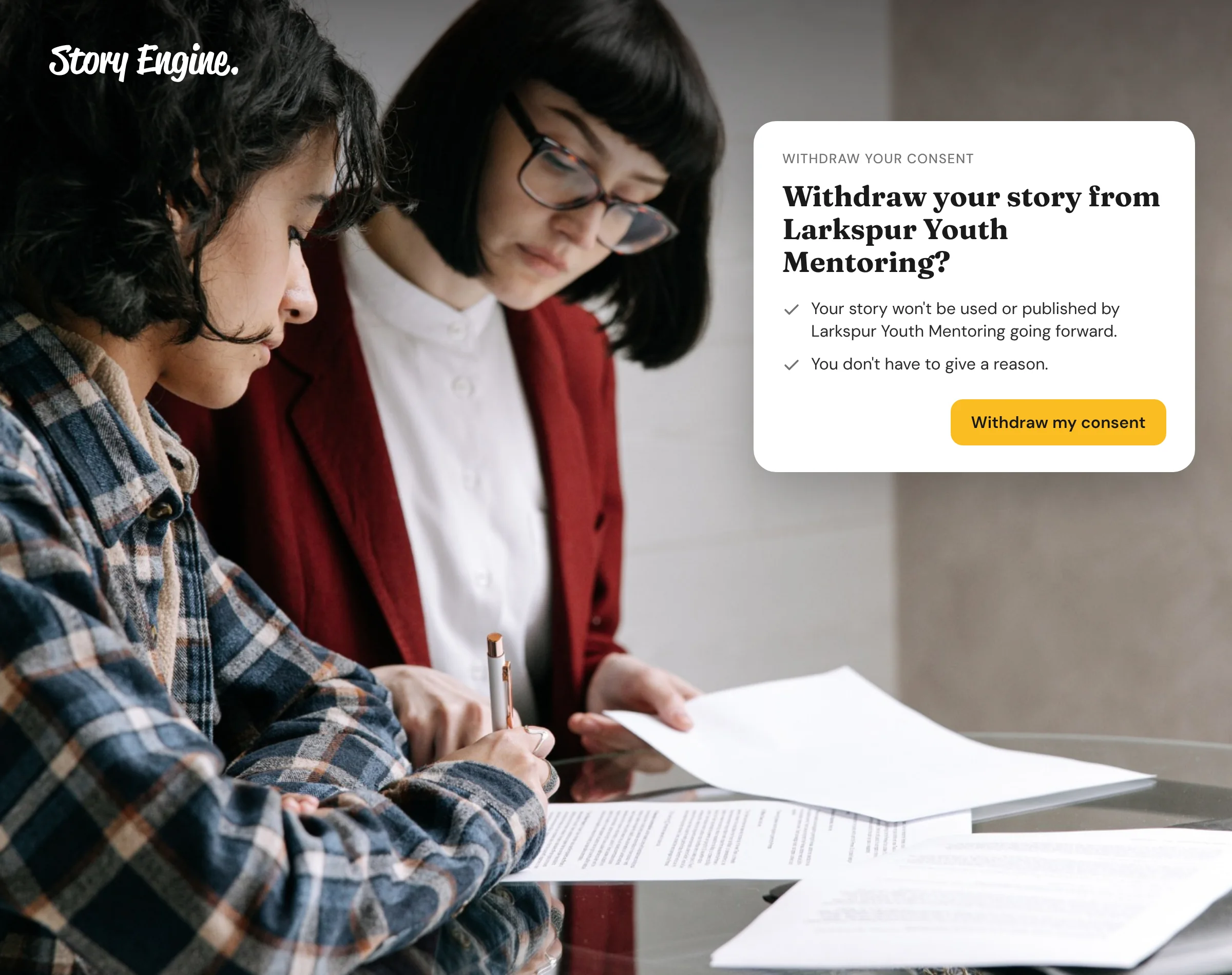
- Tell them they can withdraw consent after the interview and explain how to do that.
- If you plan to record, ask explicitly. Recording by video or audio requires a separate yes, not just agreement to the interview itself.
- Note that saying no to sharing their story is always a valid choice, with no effect on their relationship with your program.
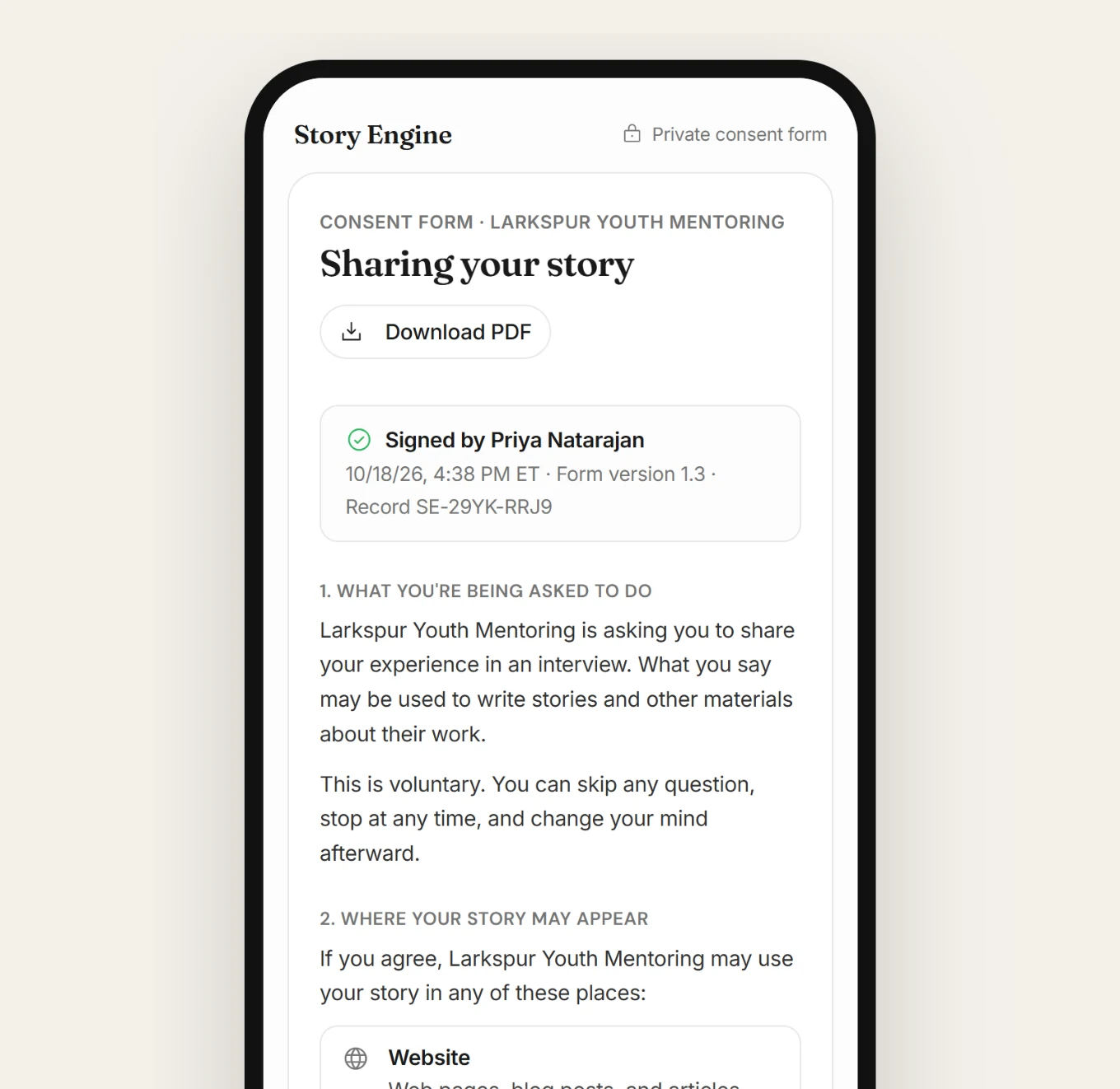
Participants must feel safe and comfortable enough to withdraw consent at any point during the collection process. Your consent process should make that easy, not difficult.
How to run a client story interview in Story Engine
Story Engine handles the structure of a client story interview so you can focus on the conversation.
1. Open Interviews and start a new one
From the menu, go to Interviews and select New interview, then From one person.
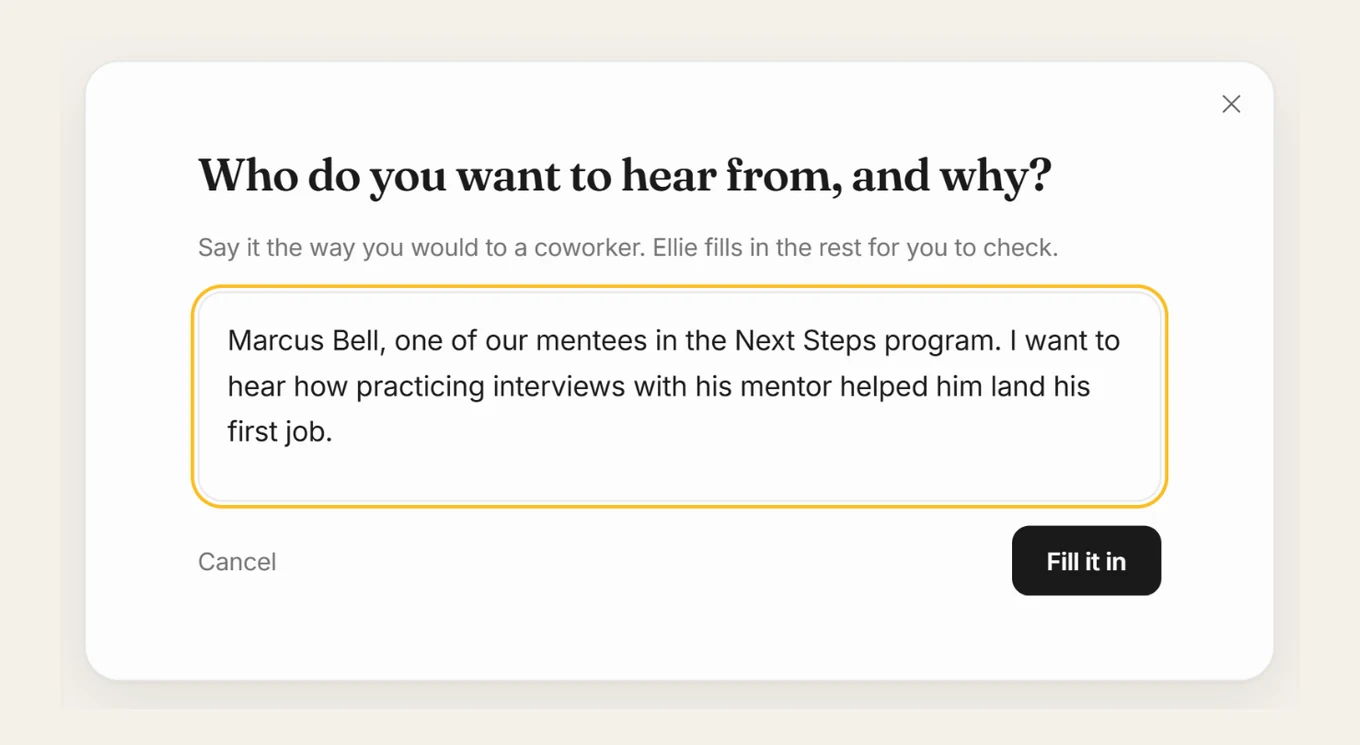
2. Describe who you want to hear from and why
Write a brief description in the prompt box, then press Fill it in. Ellie will draft the interview for you, including suggested questions.
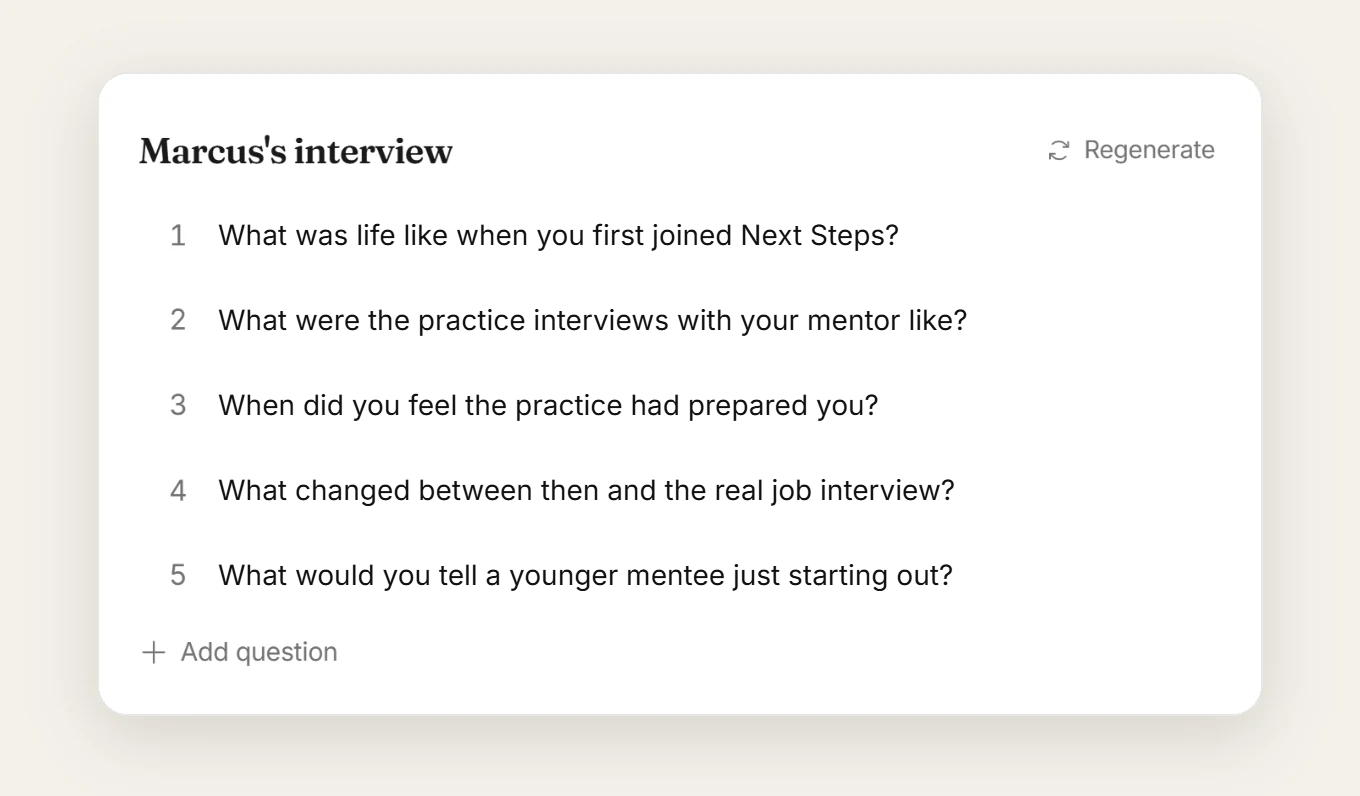
3. Review and adjust the questions
On the left side of the setup page, edit any question directly, use Add question to include something from your core set, or select Regenerate if you want a fresh draft.
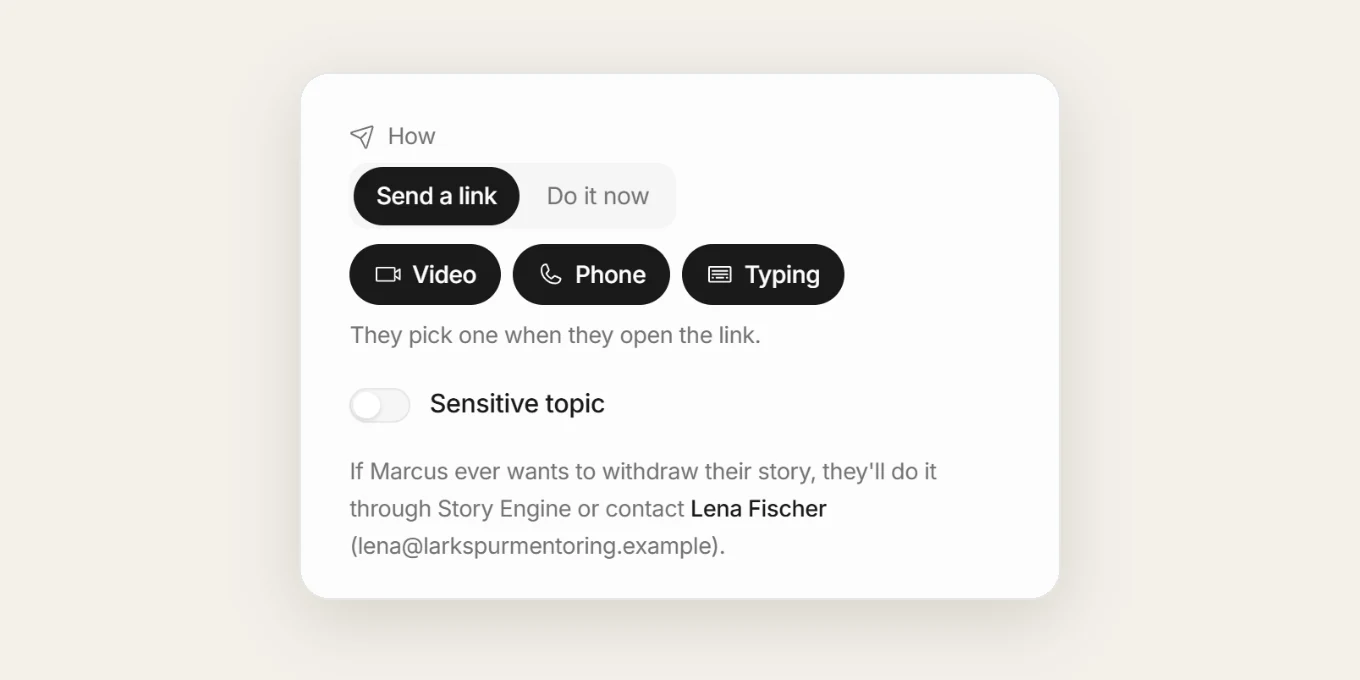
4. Check the sensitive topic switch
On the right side, look for the Sensitive topic toggle. Ellie turns this on for certain topics automatically, but it can miss one, so always check it yourself for client stories involving hardship. When it is on, the 988 Lifeline and the Crisis Text Line are visible to the person before and during the interview.
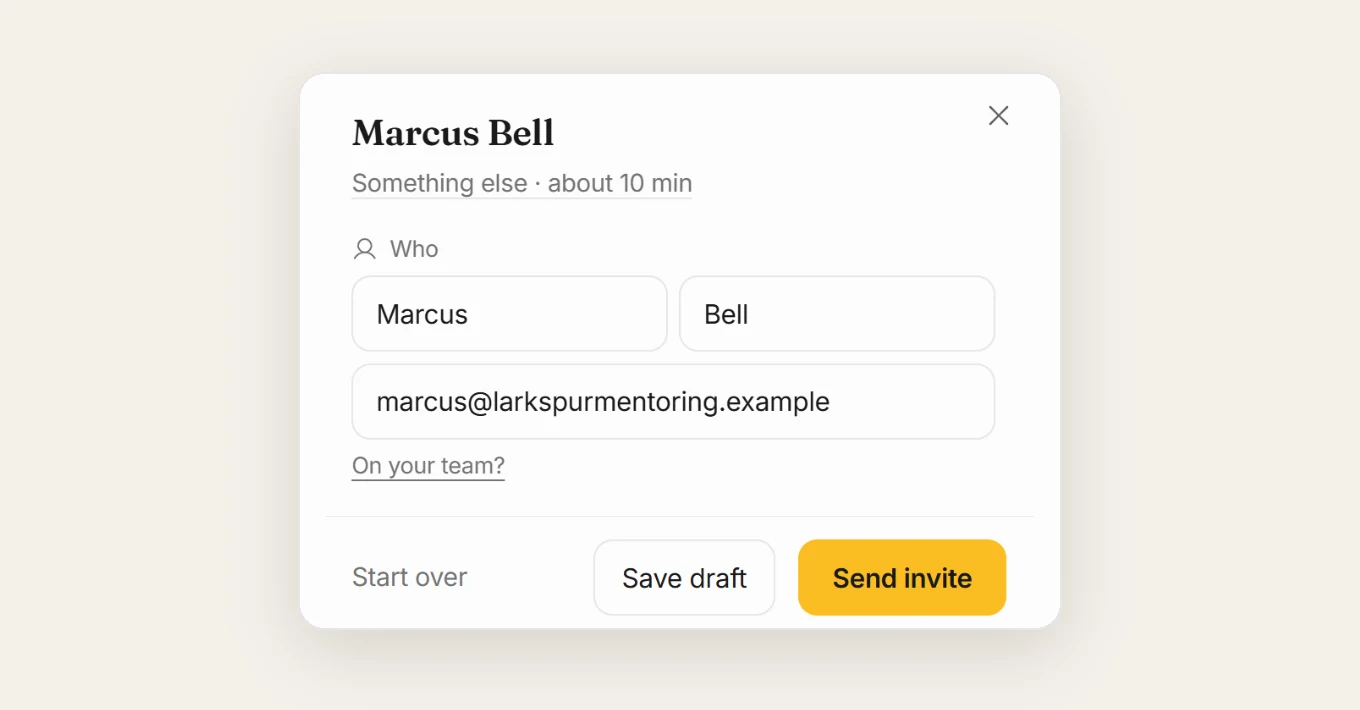
5. Send the invite
Add the person's first name, last name, and email, then select Send invite. They sign a consent form before they begin, can skip any question, and review a summary and transcript before they approve. Your team sees nothing until they approve.
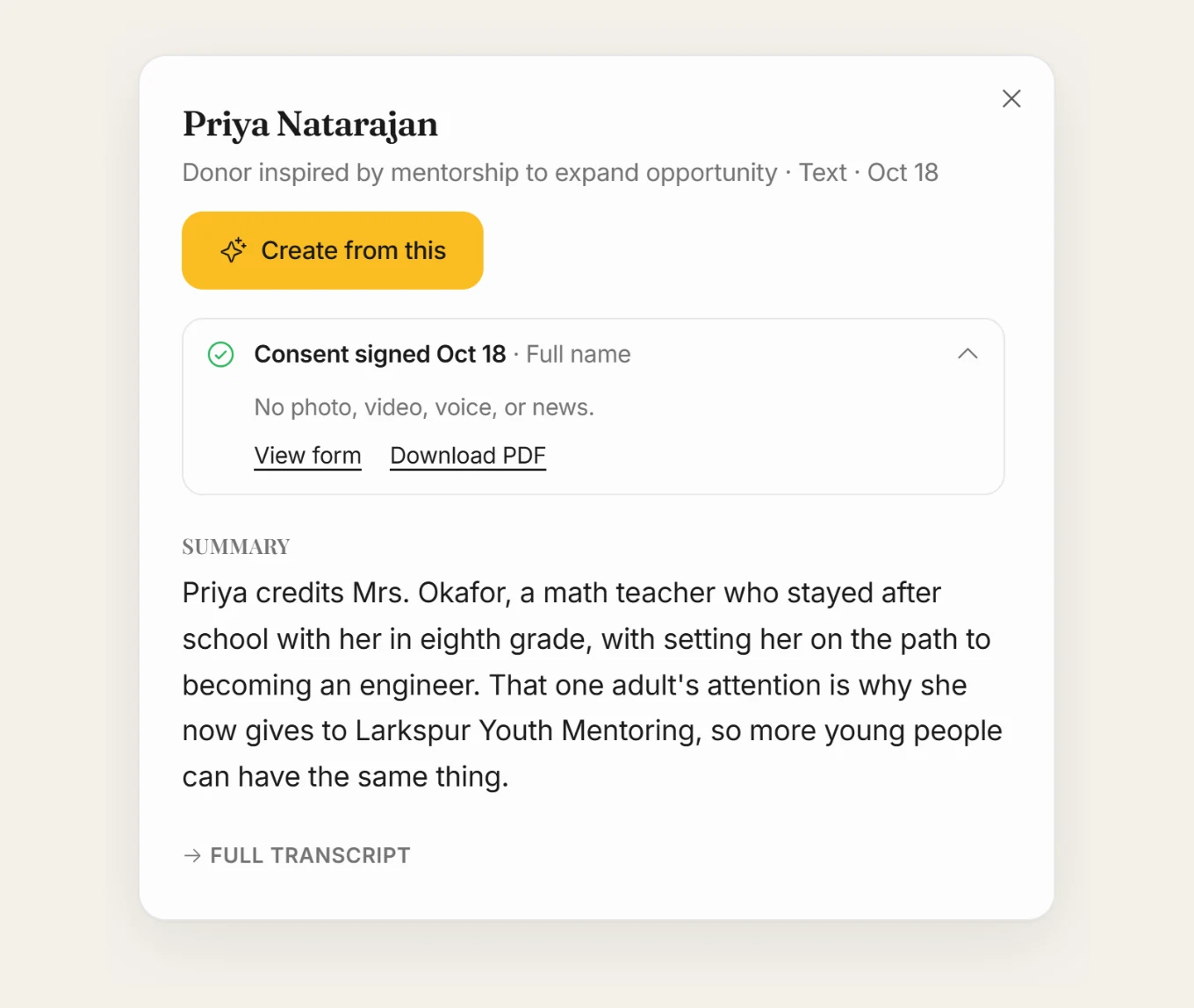
6. Create content from the finished interview
Once the person approves, open the interview and select Create from this to start drafting a story, post, or report from their words.
For a deeper look at how the AI interviewer works, see the guide on using an AI interviewer for impact stories.
Frequently asked questions
How many questions is the right number for a client story interview?
Six to ten questions is a practical range for most interviews. Fewer than six can leave gaps in the arc; more than ten tends to feel like a survey. In Story Engine, you can add, remove, or edit questions on the interview setup page until the list feels right for the person and the program.
Do I need written consent if I am just taking notes, not recording?
Written consent is good practice regardless of whether you record, because the person's words may appear in published content. Story Engine collects a signed consent form from every person before the interview begins, and keeps that form on file. The person can withdraw consent later from the link in their consent email, and a team member can also mark it withdrawn from the interview's row menu.
Can someone review their answers before we use them?
Yes, and they should. In Story Engine, every person sees a summary and their full transcript before they approve the interview. They can redo any answer or the whole interview. Your team sees nothing until they approve. For interviews you run outside Story Engine, sharing a summary or draft back to the person serves the same purpose.
Ready to run your first client story interview?
Start by writing out six to ten questions that follow the before, turning point, and after arc for your program. Or sign up for Story Engine so the tool can do this for you automatically (always review them before sharing and make sure "Sensitive topic" is toggled if needed).
If you want to understand how the AI-guided interview experience works for the person receiving the invite, the guide on using an AI interviewer for impact stories walks through it step by step.
Sources
- Putting the people in the pictures first: Guidelines for the ethical use of images and stories
- Consent collection for ethical storytelling — Bond
- IACP Successful Trauma-Informed Victim Interviewing
- Interviewing in the aftermath of trauma — Global Center for Journalism & Trauma
- Telling Stories Ethically — Wheaton College
About the authors

A nonprofit copywriter and partner at Good Creatives.

Founded the agency Good Creatives in 2015, recognized by the American Institute of Graphic Arts.